Quick answer: A 20 year old caravan is worth buying when the shell is dry, the chassis is sound, and you can pay cash. It stops being worth it the moment you need finance, need agreed-value insurance, or need the van road-ready inside a month. Age matters far less than moisture history.
Replace one dead gas appliance in a 20 year old caravan and the licensed installer must bring that installation up to the current standard, not the 2006 one. A $400 cooktop swap can pull in cylinder clearances, ventilation and pipework.
A 2006 van sits far below the cheapest new pop-top, which starts around $35,000 in 2026, so the price looks like the whole story. It isn’t. Three things decide whether a cheap van is a bargain or a slow bleed: moisture history, finance access, and compliance paperwork.
Jump to: Verdict · Cost · Water · Finance · Compliance · Inspection · Conclusion · FAQ
Is a 20 year old caravan actually worth buying?
It is worth buying for the cash buyer who inspects properly and handles light maintenance. A dry, rust-free 2006 van has finished depreciating, tows behind a mid-size vehicle, and costs a fraction of new. It is a poor buy for anyone needing finance, agreed-value cover, or immediate reliability.
| Worth buying if you | Walk away if you |
| Are paying cash | Need a secured loan |
| Will pay for an inspection | Are buying in a hurry |
| Accept being your own warranty | Need it reliable next month |
| Plan weekends and short trips | Plan long corrugated-road touring |
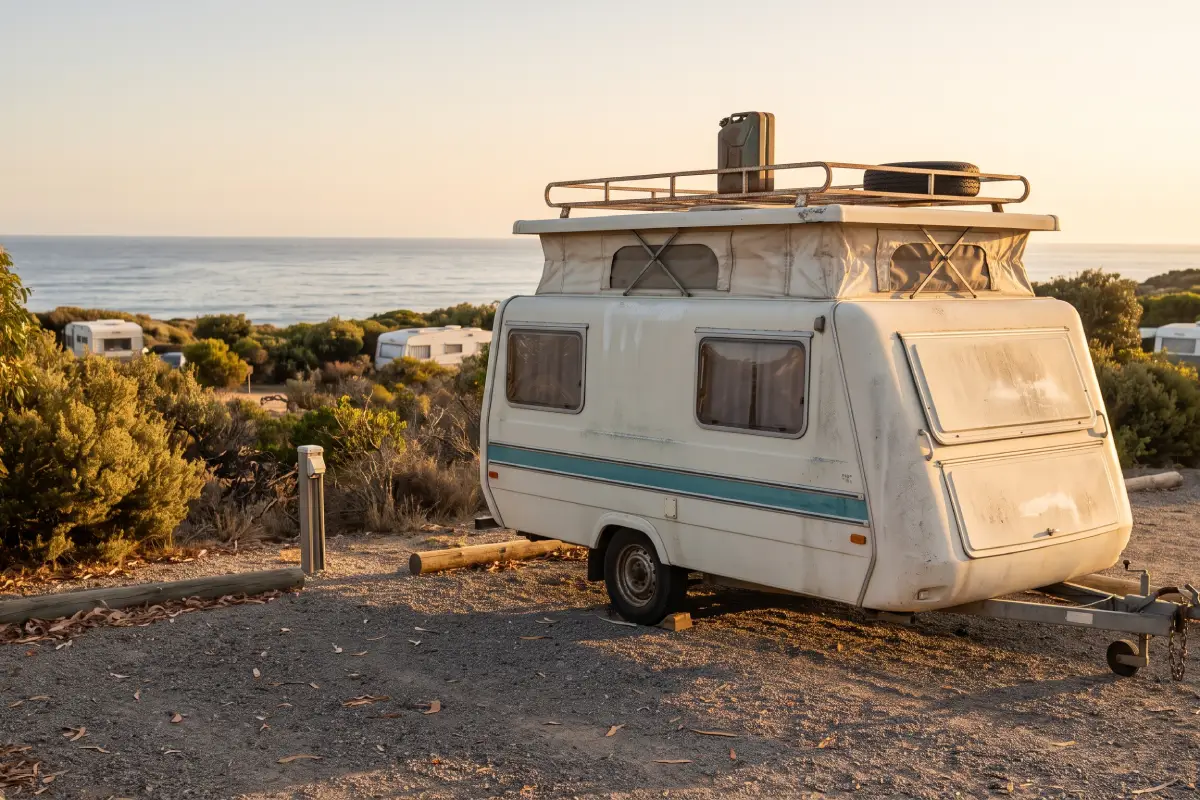
Two identical 2006 vans can be twenty years apart in real condition. The carport van with fresh sealant is sound. The one that sat under a gum tree with cracked seals is a demolition job wearing paint.
What does a 20 year old caravan really cost to own?
Purchase price is the smallest number. An old van erases depreciation but closes off secured finance, restricts you to market-value insurance, adds annual safety inspections in some states, and front-loads a catch-up bill for tyres, bearings, brakes and seals.
| Factor | 20 year old (2006) | 8 to 10 year old | New |
| Depreciation | Finished | Flattening | Steepest |
| Secured finance | Rarely available | Available | Best rates |
| Insurance basis | Market value | Either | Agreed value |
| Rego inspection (NSW) | Every year | Required | Exempt 5 years |
| First-year repairs | High | Moderate | Minimal |
Risk 1: Why does water damage decide the deal?
Water ingress is the one fault that can exceed the van’s total value, and insurers do not pay for it. Gradual leaks through failed seals count as poor maintenance rather than an insured event. Rot in timber framing and ply flooring pushes bills into the tens of thousands, writing off a cheap van outright.
Insurers draw the line at cause. A branch through the roof is claimable. A slow leak that rotted the frame over five seasons is not, because policies require owners to keep the van watertight.
So an old van needs a moisture test, not a walk-through. One Sydney repairer uses a pin moisture meter and treats readings above roughly 11 percent in plywood as a problem.
Check five entry points: window and hatch seals, roof-to-wall joins and end caps, anything screwed through the skin, the wet area floor, and the air conditioner surround.
Risk 2: Can you finance and insure a 20 year old caravan?
Finance is the hard wall. Most Australian lenders stop secured caravan finance between 12 and 15 years, and some measure that limit at the end of the loan term. A twenty year old van means cash or an unsecured loan at a higher rate. Insurance stays available, usually on market value.
You therefore cannot spread the van and its repairs across a five year term. A $14,000 van needing $3,500 of tyres, bearings, brakes and resealing is a $17,500 van, all of it cash.
On cover, payouts reflect age rather than what you spent. Declare every modification, because undeclared solar, lithium or suspension work can void a claim.
Risk 3: What certification catches buyers out?
Gas is the expensive one. In Queensland, the buyer of a used registered caravan must receive a gas compliance certificate less than three months old before taking ownership, and replacing a failed appliance forces that installation up to the current standard rather than the one it was built to.
Queensland’s Petroleum and Gas Inspectorate sets out the obligations for owners, buyers and sales yards in its guideline for gas safety and compliance in caravans, camper trailers and recreational vehicles.
AS/NZS 5601.2:2020 requires a controlled area around gas cylinders excluding ignition sources, and no 2006 layout was designed around it. Electrical upgrades work the same way: adding solar, lithium or an inverter brings the wiring under current requirements.
| State | What applies to a 2006 van |
| NSW | Yearly safety inspection, caravans over 5 years old, ATM up to 4.5t |
| QLD | Safety certificate on most transfers, plus a current gas certificate |
| VIC | Trailers sit outside the standard roadworthy requirement |
| Elsewhere | Varies; re-registering after months unregistered triggers inspection |
Tyres are a purchase cost, not a maintenance one. Australian Tyre Industry Council guidance, widely quoted by local retailers, is annual inspection at five years and removal at ten years regardless of tread. Assume a full set plus the spare.
How do you inspect an old caravan?
Work outside to inside, structure before fit-out. Cosmetics tell you about the seller; the chassis, floor and seals tell you about the van. Inspect in daylight, on level ground, with the van dry rather than freshly washed.
- Sight down both sidewalls. Ripples or bulges mean delamination or a past repair.
- Check the compliance plate and VIN. Confirm ATM, tare and ball weight against your tow rating.
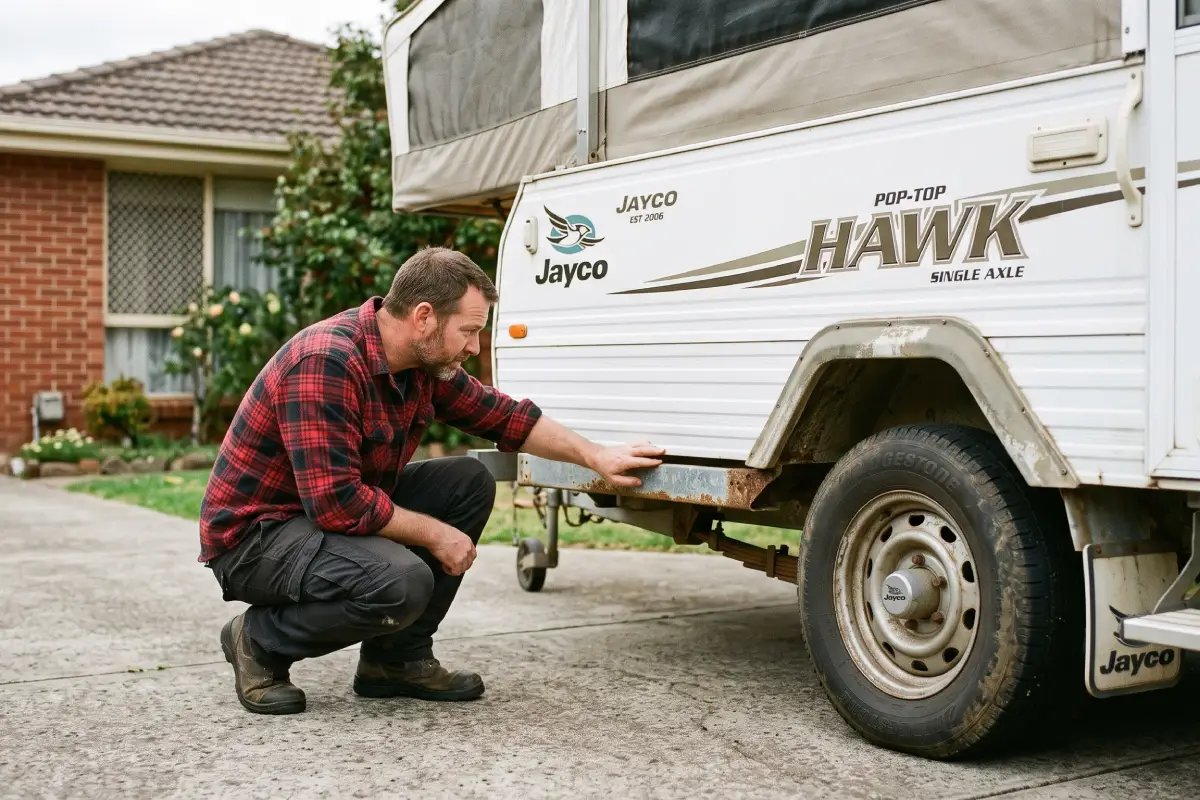
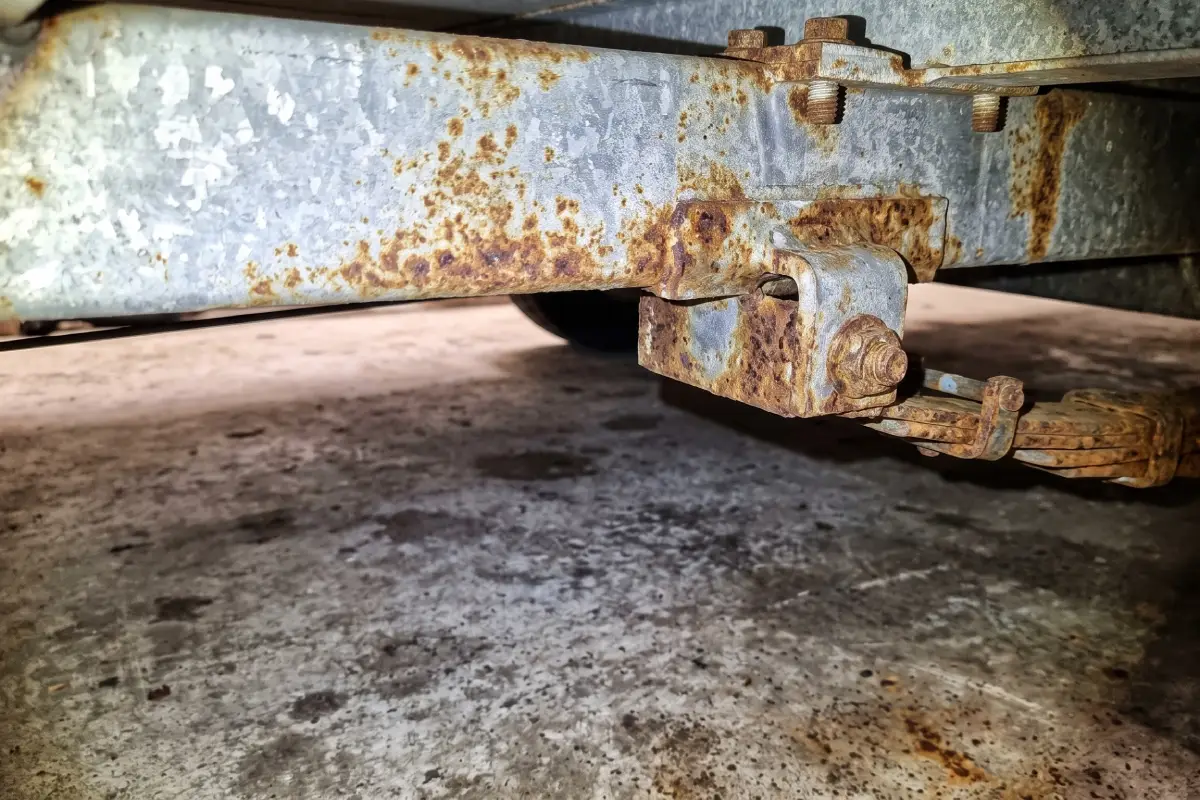
- Inspect the chassis and drawbar with a torch. Surface rust is normal; flaking scale, cracks and amateur welds are not.
- Read every tyre date code, including the spare.
- Test every seal line around windows, hatches, lights and the roof-to-wall join.
- Walk the entire floor heel to toe. Softness near the shower or doorway means compromised ply.
- Press internal walls, cupboard bases and ceiling lining near vents and the air conditioner.
- Run a moisture meter on interior ply, or pay an inspector who does.
- Operate every system on 240V and gas: fridge, hot water, cooktop, pump, brakes, external lights.
- Demand the paperwork. Registration matching the VIN, reseal invoices, and a gas certificate where required.
The four deal-breakers
Walk if you find a spongy floor, a rippled sidewall with staining inside, flaking chassis rust, undocumented welds near the drawbar, or paperwork that does not match the plate. A seller refusing inspection belongs on the same list.
Price is negotiable. Rot is not.
How do you get an interstate purchase home?
The first tow is the riskiest one. Cheap vans sit wherever their sellers live, and a 2006 van’s first trip under your ownership runs on bearings, brakes and tyres you have not serviced yet.
Towing it yourself puts a thousand kilometres through unproven running gear. Paid transport is a flat fee that shifts that risk to an insured carrier; most interstate operators run the van on a tilt tray truck rather than towing it behind their own vehicle, so your bearings, brakes and tyres never turn a wheel until you’ve serviced them. It also produces paperwork: operators such as Interstate Caravan Transport document condition at pickup and at delivery, giving you an independent record dated the day you took ownership.
Prepare the van either way. Drain the tanks, disconnect gas and 240V, retract the awning, and remove roof accessories that can lift at highway speed.
Key takeaways
- Condition beats calendar age. Storage and reseal history separate two otherwise identical vans.
- Insurers exclude gradual water ingress, so moisture can write the van off.
- Secured finance mostly stops at 12 to 15 years. Budget the van and its repairs as cash.
- Replacing one gas appliance drags the whole installation up to current standard.
Conclusion
Whether an old caravan is worth buying depends on you, not on the van’s age. There is no single verdict here, and anyone offering one is selling something.
It works if you pay cash, inspect properly or pay someone who does, and accept being your own warranty. It fails if you need a lender, need agreed-value cover, or need the van reliable next month.
So the decision sits in one place: moisture history and chassis. Get those right and a 2006 van is a rational purchase. Get them wrong and the purchase price becomes the cheapest part of the mistake.